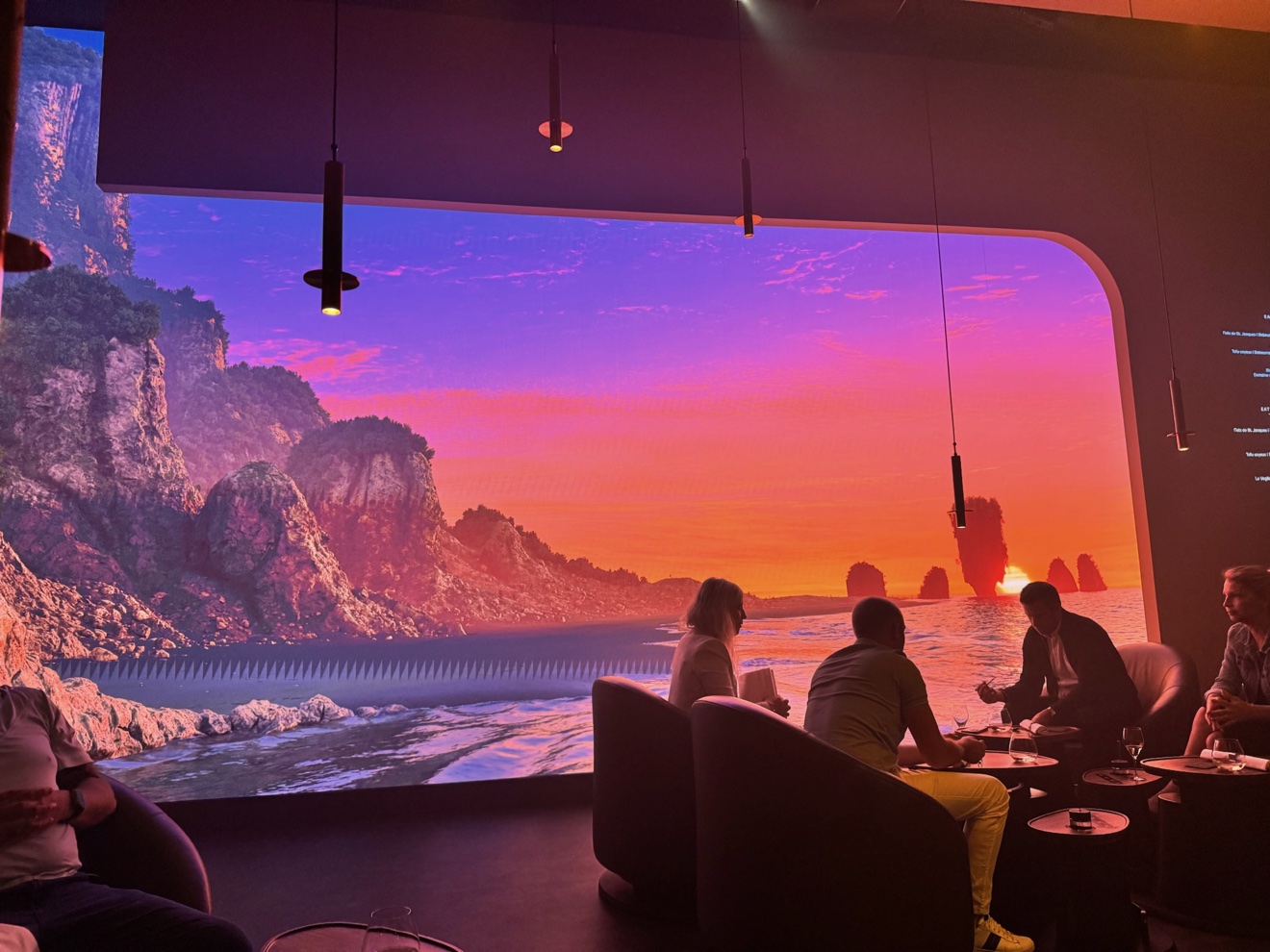
You walk into the space and it feels like a restaurant. There is an hors d’oeuvre. There is a drink. The room is beautiful and the evening seems to be unfolding the way elegant evenings unfold.
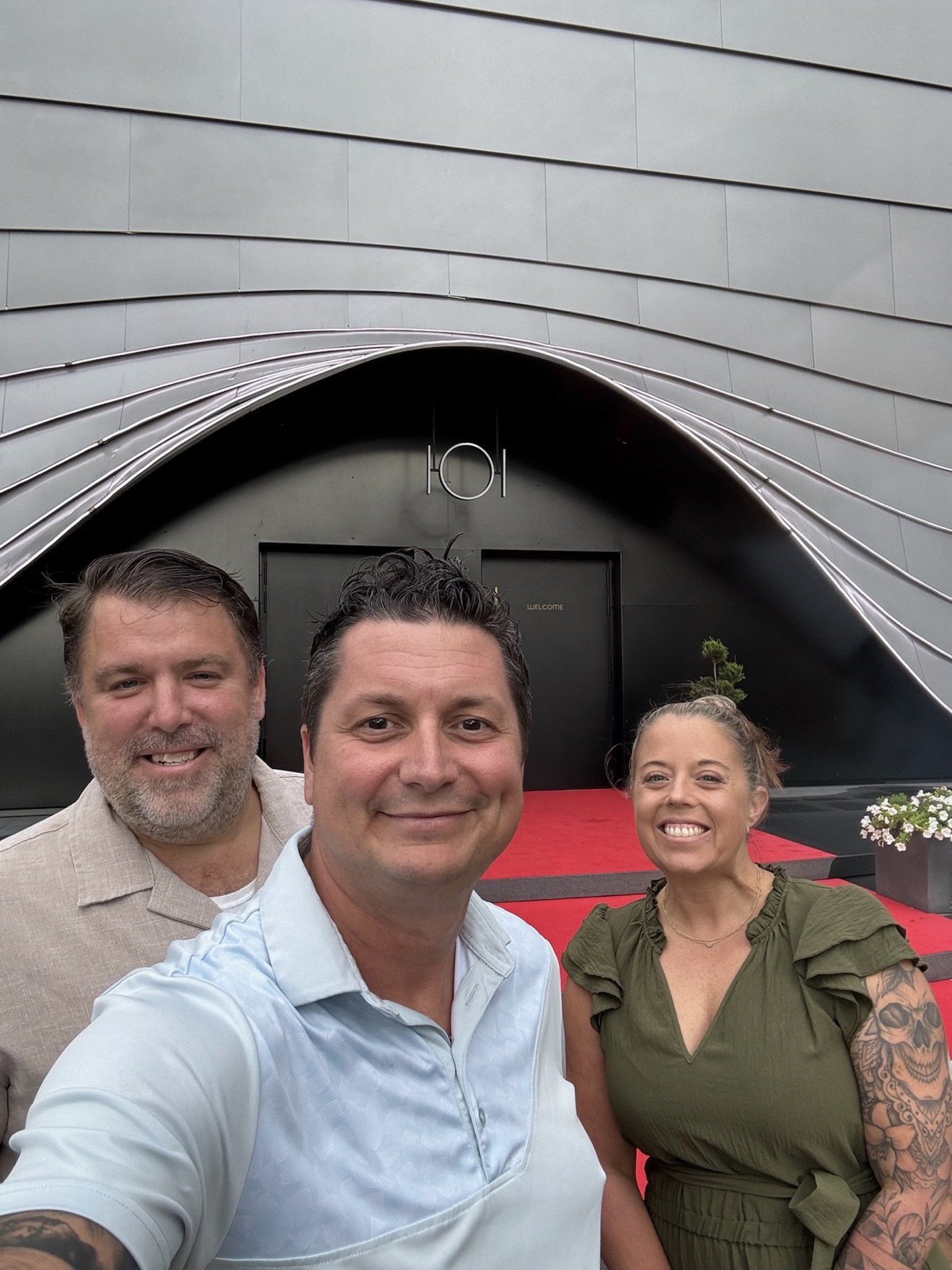
Then you get into your seat, and your seat starts moving.
What follows is one of those experiences that leaves you speechless, and I do not say that lightly. The seats move with a Kabuki drop into the first scene, and from there you travel through these worlds while the food comes to you. Amazing food. Amazing drinks, paired with real intention. Things popping out of your seat. Digital surroundings moving around you as the chair carries you from one scene to the next. Eleven worlds, each one its own complete environment, each course arriving inside a story.
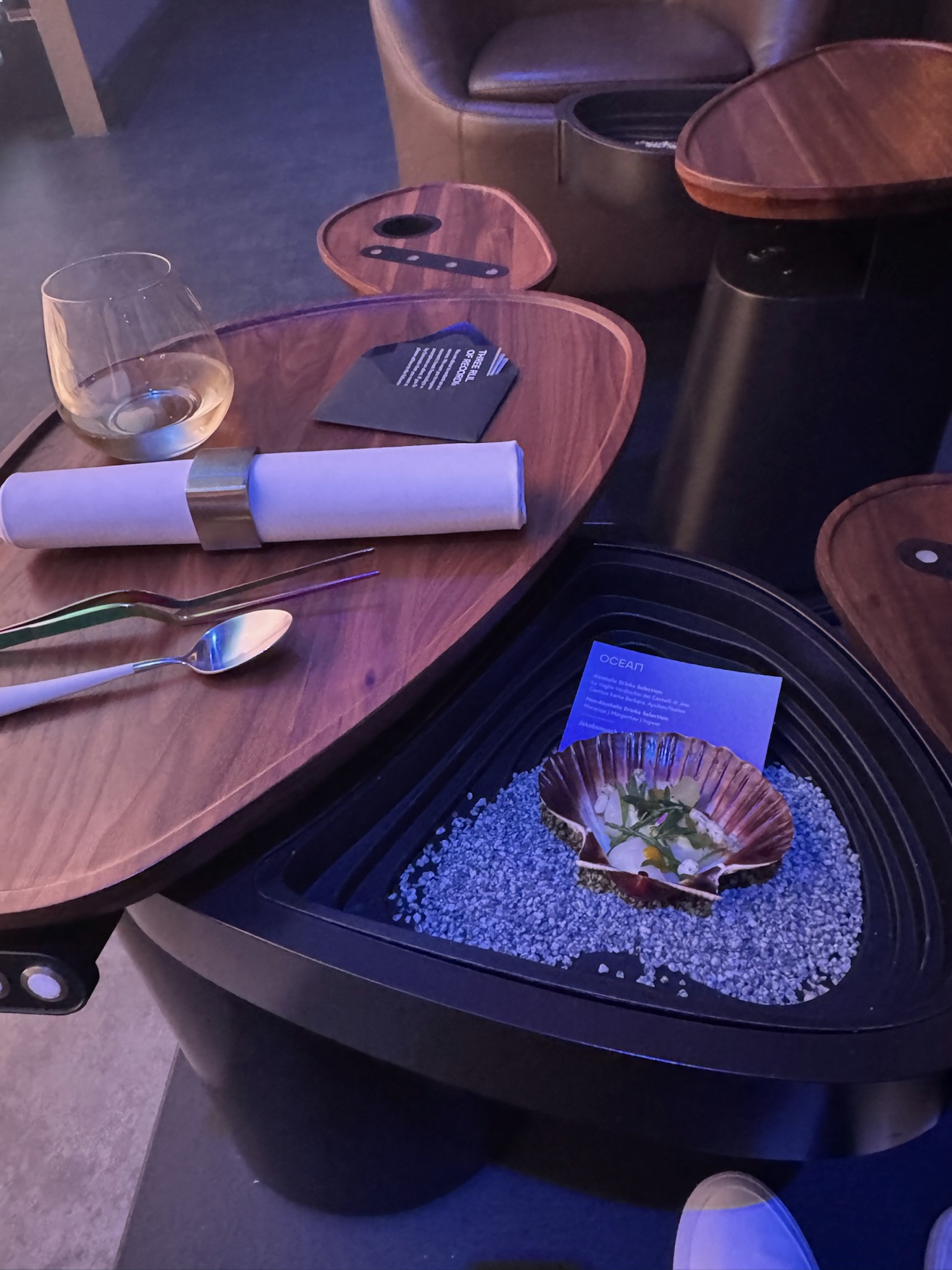
It is connecting in a different way. That is the simplest way I can describe it, and also the most accurate. You are not watching something while you eat. You are not eating while something happens around you. The meal and the motion are one thing. The flavor has a setting. The setting has a flavor.

Here is what I keep thinking about: this could only happen with a ride designer and great vision. A restaurateur would have themed a dining room. A show director would have put entertainment next to the tables. It took someone who thinks in ride systems to ask the deeper question, which is not how do we make dinner more interesting, but what if the vehicle is the venue?
That is the leap. The floating chair is not a gimmick and it is not transportation. It is the table, the stage, and the story, all at once. Once you commit to that idea, everything else follows. The pacing of the courses follows the pacing of a ride. The reveals work like show scenes. The transitions between worlds do the emotional work that a great attraction does between its set pieces, resetting your senses so the next course lands the way the chef intended.
I have spent my career thinking about throughput, about moving people through spaces beautifully. Eatrenalin made me think about it differently, because here the movement is the luxury. You do not go to the experience. The experience carries you. There is something profound in that inversion, in being served not just food but momentum, not just courses but chapters.
The moment that takes you beyond. That is the phrase I keep returning to. Every experience I have ever admired has one, the beat where it stops being impressive and starts being transporting. At Eatrenalin, that beat happens the first time your chair lifts and the room falls away and you realize dinner is not happening around a ride. Dinner is the ride.
Most innovation in dining is about the plate. Better ingredients, bolder technique, prettier presentation. All of that matters, and the food here is world class. But the plate was never the constraint. The constraint was the room, the assumption that a meal happens in a chair that stays still, in a space that stays the same, while the courses change. Eatrenalin removed the constraint instead of optimizing inside it.
That is the lesson, and it is bigger than restaurants.
Every industry has a version of the stationary chair, the thing everyone assumes is fixed because it has always been fixed. The breakthrough never comes from decorating the chair. It comes from asking what becomes possible if the chair moves.
Someone asked that question in Rust, Germany. Then they built eleven worlds to prove the answer.
I am still thinking about it. I suspect I will be for a long time.