

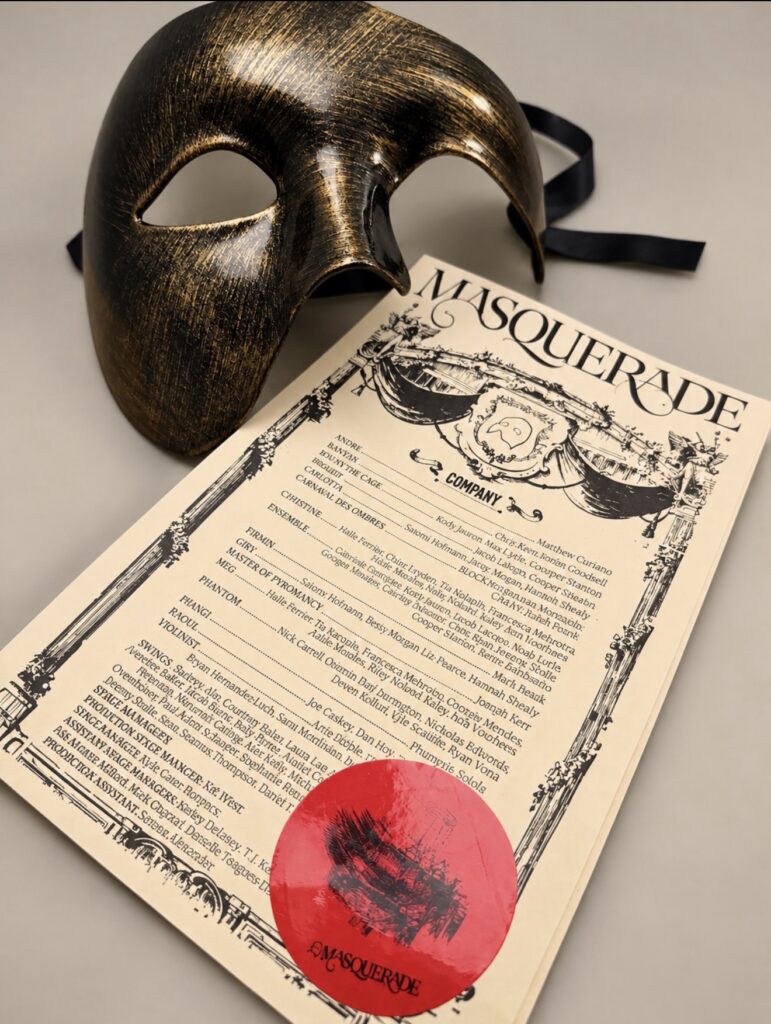
You put the mask on before you walk in. That is the first design decision, and it is a brilliant one, because the moment the mask goes on you stop being an audience member. You are in it. Whatever happens next is happening to you, not in front of you.
Then you walk into the space and the show starts with a reveal I will be thinking about for a long time. The cast is singing “Masquerade.” Shimmering confetti is falling from the ceiling. The entire company is dancing, all at once, all around you. It is truly mind-blowing, and it happens in the first moments, before you have found your footing, before you have decided what kind of night this is going to be.
That is what sets the bar. Not the production value, though the production value is enormous. Not the story, though the story is impeccable. Not the acting, though the acting is stellar. It is the decision to win the room in the first thirty seconds and then spend the rest of the night keeping the promise that opening made.
Most shows build toward a climax. The great ones open with a promise. There is a difference, and it is everything.
A climax says: stay with us, it gets good. A promise says: it is already good, and we are just getting started. The audience feels the difference immediately, even if they could never articulate it. One asks for patience. The other creates trust. And trust is the more valuable currency, because a room that trusts you will follow you anywhere. A room that is waiting to be impressed will check its watch.
Masquerade never gave the room a reason to check its watch. From that first reveal, you are pulled in and captivated all the way through. Every scene earns the next one. The momentum never breaks. That is not an accident of talent, though the talent is real. That is architecture. Someone decided what the audience should feel in the first minute, and then built every minute after it to protect that feeling.
I talk about naming the feeling first. This is what it looks like when a production actually does it. The feeling here is wonder, the specific kind of wonder that comes from being surrounded by something beautiful before you have had time to do anything but feel it. The masks help. The confetti helps. But what really does it is the confidence of the opening. It does not ease you in. It does not warm up. It arrives fully formed and dares you to keep up.
Here is the lesson I keep coming back to, and it applies far beyond a stage in New York.
Your opening is your thesis. The first thing a guest sees, hears, feels, or tastes is the moment they decide what kind of experience they are having. You do not get to revise that decision later. You can only confirm it or contradict it, and contradicting it is almost impossible once the room has made up its mind.
So the question is never really how do we end strong. Endings matter, but they are built on the foundation of the beginning. The question is: what promise are we making in the first thirty seconds, and is everything after it keeping that promise?
Masquerade made its promise with a song, a storm of confetti, and a cast that came out dancing like the night depended on it. It kept that promise for the entire show.
That is the bar now.