
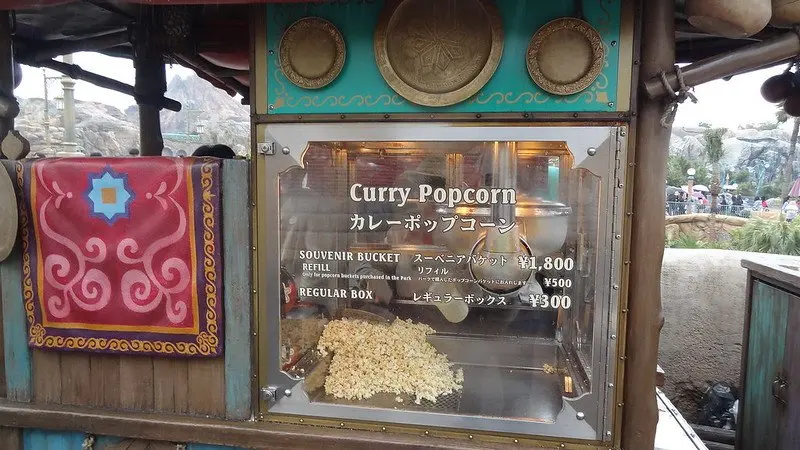
In Tokyo Disneyland, there is a line. Not for a ride. For popcorn.
On a busy Saturday it stretches twenty minutes. For a box that costs less than three dollars.
The first time I understood what was happening there, it rearranged something in my head about what an experience actually is.
Tokyo Disney Resort runs roughly 25 popcorn carts across its two parks, serving around 11 flavors at any given time. Garlic-shrimp. Soy sauce and butter. Black pepper. Curry. Milk tea. Honey. These are not novelty items tucked in a corner. They are printed on the park map, each cart’s flavor listed like an attraction. Guests plan their day around them.
Here is what makes it genius. It works on three layers, and most operators never get past the first one.
The first layer is scent. You smell the milk tea wagon at Cape Cod before you see it, and it smells exactly like drinking milk tea. Walk past the chocolate wagon in Fantasyland and it hits you like a wave of hot cocoa. Curry perfumed Westernland for decades, and one writer said the smell was still in her nostrils years after her visit. Scent is the oldest memory trigger human beings have. Tokyo Disney aims it like a spotlight, and the ammunition is corn.
The second layer is ritual. The souvenir buckets are worn crossbody on long straps, like purses, with lids that seal tight enough to ride Space Mountain with. Nearly every cart sells a different bucket design, which means the only way to collect them is to tour the park cart to cart. Guests wear three at a time. Strangers offer you a handful from their tub. It has become its own micro-culture, with its own etiquette, and the park never had to program a minute of it. They just built the conditions and got out of the way.
The third layer is memory. Flavors rotate seasonally, so a taste becomes a timestamp. That flavor means that trip, that season, the person you were standing next to. Popcorn earned a place in the finale of Celebrate! Tokyo Disneyland, the park’s nighttime spectacular. Think about that. The castle show. They put popcorn in it.
This is why it is beyond the moment. The bucket goes home. It sits on a shelf in Osaka or Los Angeles or London, and years later you catch sight of it and you are back on that street smelling curry. Most parks sell you a souvenir. Tokyo Disney sells you a sense memory with a strap on it. The experience does not end at the gate. It was designed not to.
The lesson for anyone building experiences: the thing people line up for is not always the thing you market. Sometimes it is the three-dollar box of corn that carries the whole day. The question is whether you designed it on purpose, or whether you got lucky. Tokyo Disney does not strike me as the lucky type.