On the morning of November 1, 1755, the churches of Lisbon were full. It was All Saints’ Day, and the city was at worship.
Then the ground moved.
What followed was one of the deadliest earthquakes in recorded history. The shaking lasted minutes. Then came the tsunami. Then the fires, which burned for days. Tens of thousands of people died, and the center of one of Europe’s great cities was erased in a single morning.
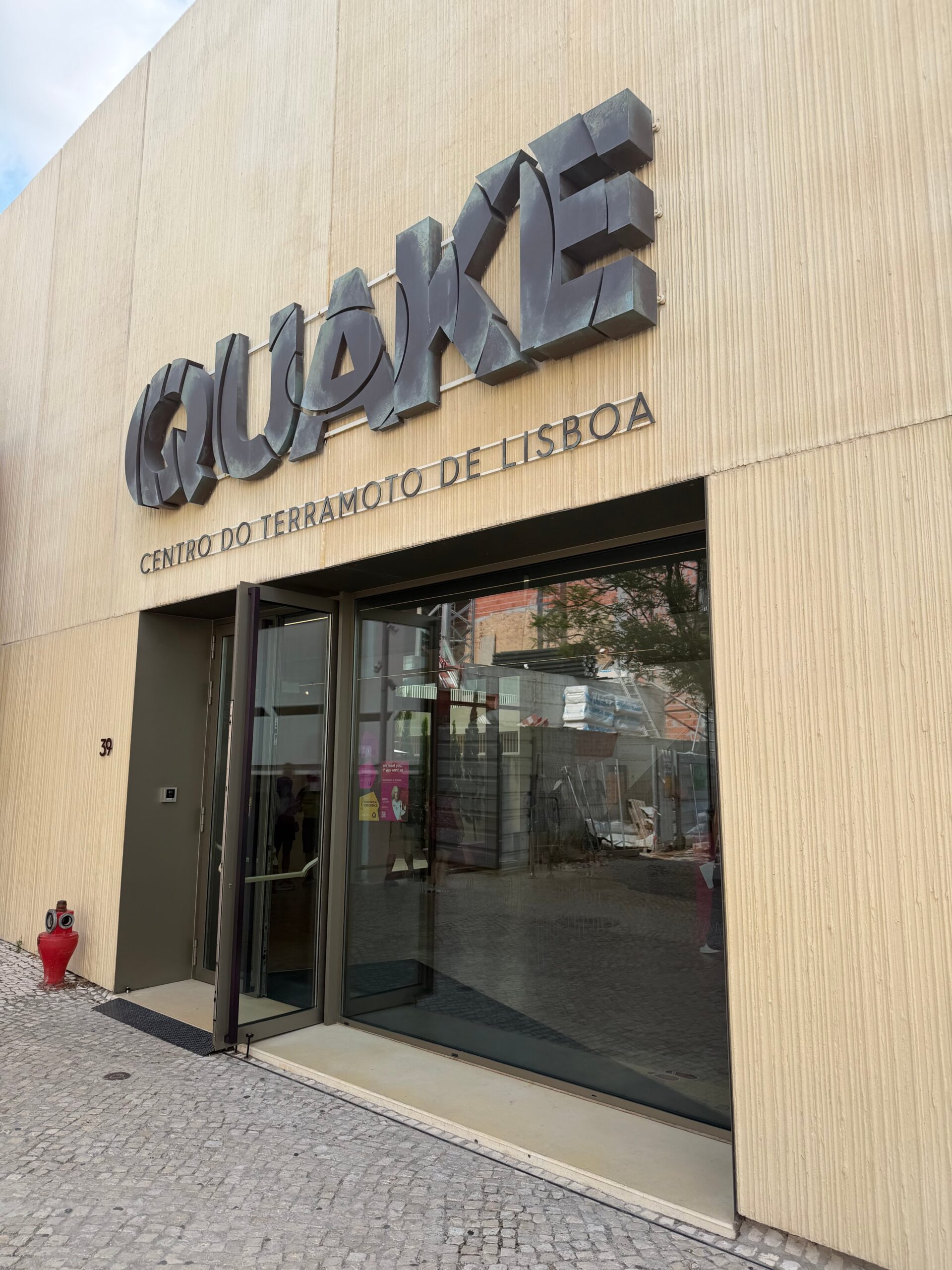
There is now a museum in Belém, a district of Lisbon, built around that morning. It is called QUAKE, and it is one of the most instructive pieces of experience design I have studied in years. Not because of its technology, though the technology is excellent. Because of the order in which it teaches.
It was designed by Jora Vision, a Dutch experience design firm that carried it from concept through turn-key production, and it earned a TEA Thea Award for Outstanding Achievement in the historical experience category. I mention that because the people who judge this work for a living recognized what the design was doing, which is exactly what this post is about.
I walked through it with my family on our trip to Portugal, and I watched the thesis work in real time on my own kids.
The visit is a ninety minute journey through nine timed scenes. You move through rooms the way the story demands, not the way your curiosity wanders. And there is a story, not just a sequence. You meet a character called the Professor in an abandoned laboratory, and you are sent back in time on a mission to recover missing documents. You walk a recreated Lisbon street as it looked in 1755, alive and ordinary, full of the small details that make a place feel real before anything happens to it. You meet the heroes and villains of that era. Then the church.
You sit in a pew. The ground begins to move. The church collapses around you.
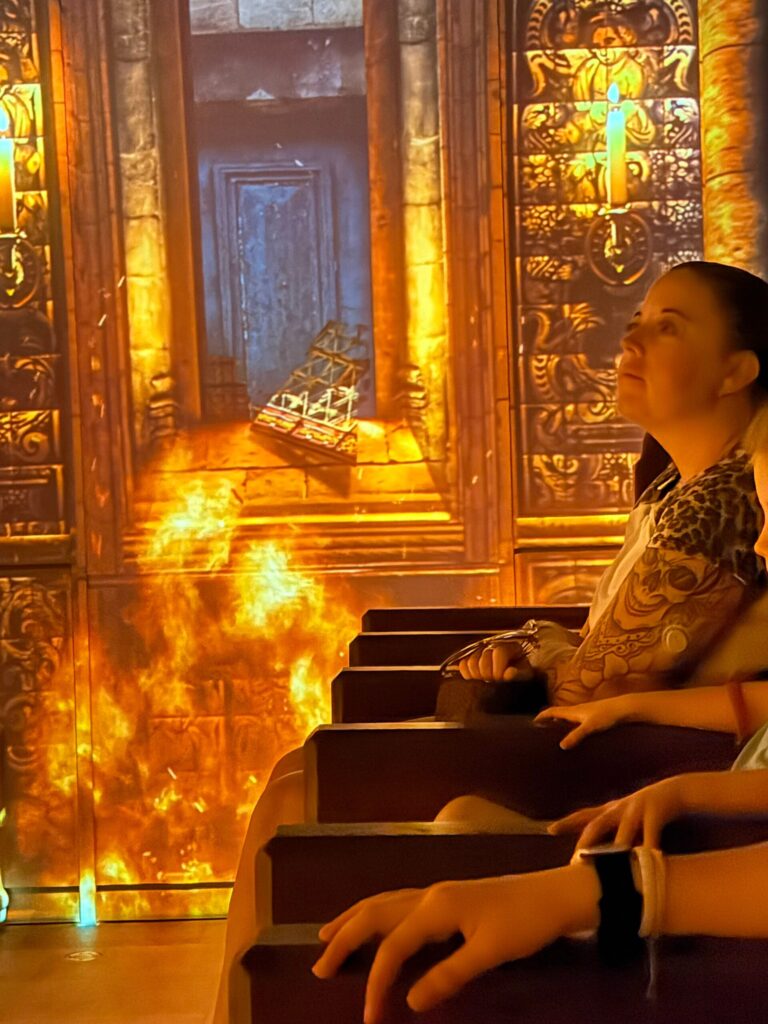
Afterward you walk through the destroyed city, past what is left of what you just saw intact. And the journey ends with the rebuild, with how Lisbon answered the worst morning in its history by deciding what kind of city it would become next.
Video mapping, simulators, sound design, even scent. The full sensory register, deployed with restraint. Nothing in the experience exists to show off. Everything exists to put your body inside the event before your mind is asked to understand it.
That sequencing is the entire thesis, and it is the opposite of how most education works.
Most museums, most classrooms, most corporate training, most onboarding decks, they all lead with information and hope the feeling follows. Here are the facts. Here is the timeline. Here is the diagram of the tectonic plates. Please care about this now that you know it.
QUAKE reverses the order. It gives you the feeling first and earns the right to teach second. By the time the science arrives, how earthquakes start, how tsunamis form, why Lisbon was uniquely vulnerable, what happened later in San Francisco and Japan, you are not receiving information. You are receiving answers to questions your body already asked.
That is a completely different kind of learning. Information without emotion is trivia. It is stored shallow and retrieved never. Emotion without information is just a thrill, vivid for a day and gone by the week. But emotion first, then information, that sequence builds something durable. The feeling creates a shelf, and the facts finally have somewhere to sit.
The designers said this out loud. Jora Vision’s creative director described the central challenge as holding two demands at once. The experience had to be educationally relevant, historically and scientifically accurate, and respectful of a real catastrophe. And it had to break completely from the traditional museum, built around a real plot with a beginning, a middle, and an end. His test for success was that visitors would leave having played a role on an emotional level. Not having seen an exhibit. Having played a role. That sentence could hang in every design studio in our industry.
The people who built QUAKE clearly understood this, because they did not stop at the emotional architecture. They built a genuine educational engine underneath it. There is a game inside the experience called Treme-Treme, developed with the Instituto Superior Tecnico in Lisbon. It lives at one of the interactive stations, it ends with a quiz, and its effectiveness is studied in partnership with actual schools. The full version is free online, on computers, phones, and tablets.
Read that again. A museum built a learning tool with a university, validated it with schools, and gave it away. That is not a gift shop strategy. That is an institution deciding that its job does not end at the exit.
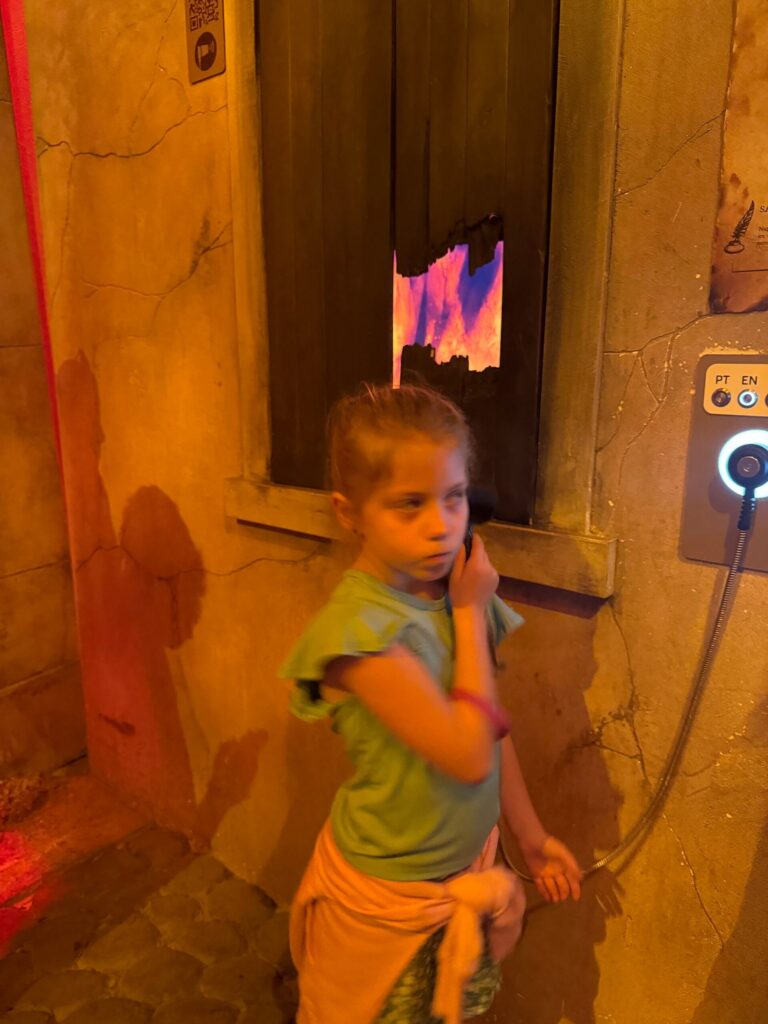
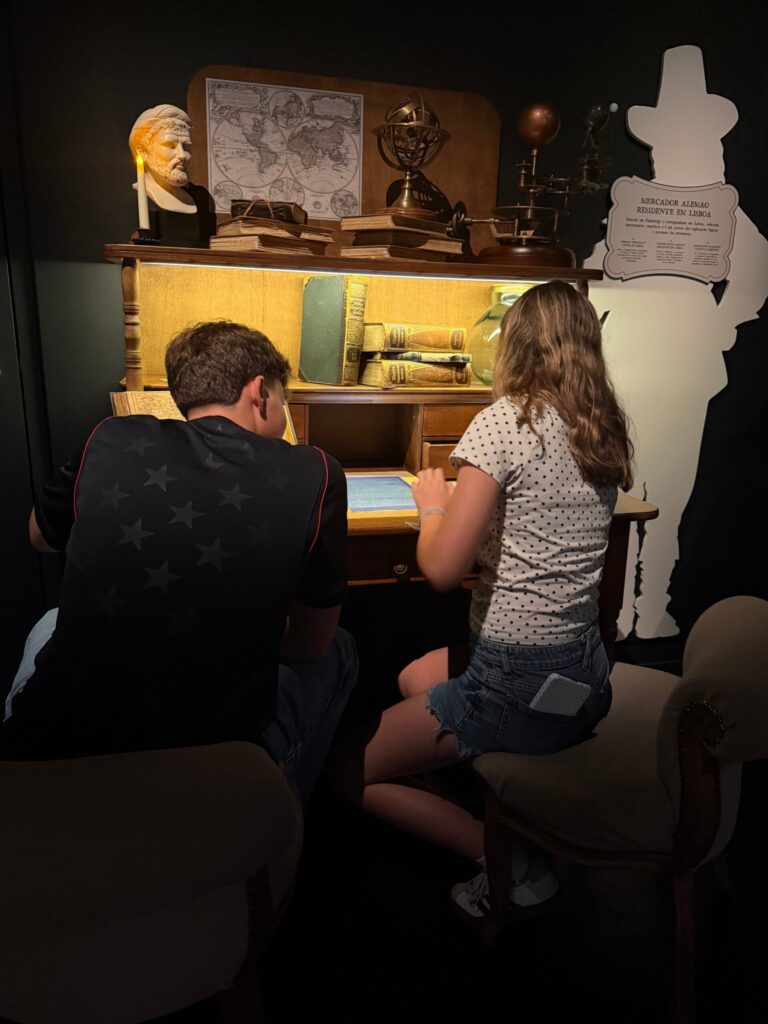
I watched it happen. One of my kids with a handset pressed to her ear at a cracked wall, listening to the city burn on the other side. Two others hunched over the Professor’s desk, working the documents like it mattered. Nobody told them to care. The design did that.
The RFID wristbands every visitor wears make the same point in hardware. The experience continues at home, after the visit ends. The exit is not the end of the design. It is a scene change.
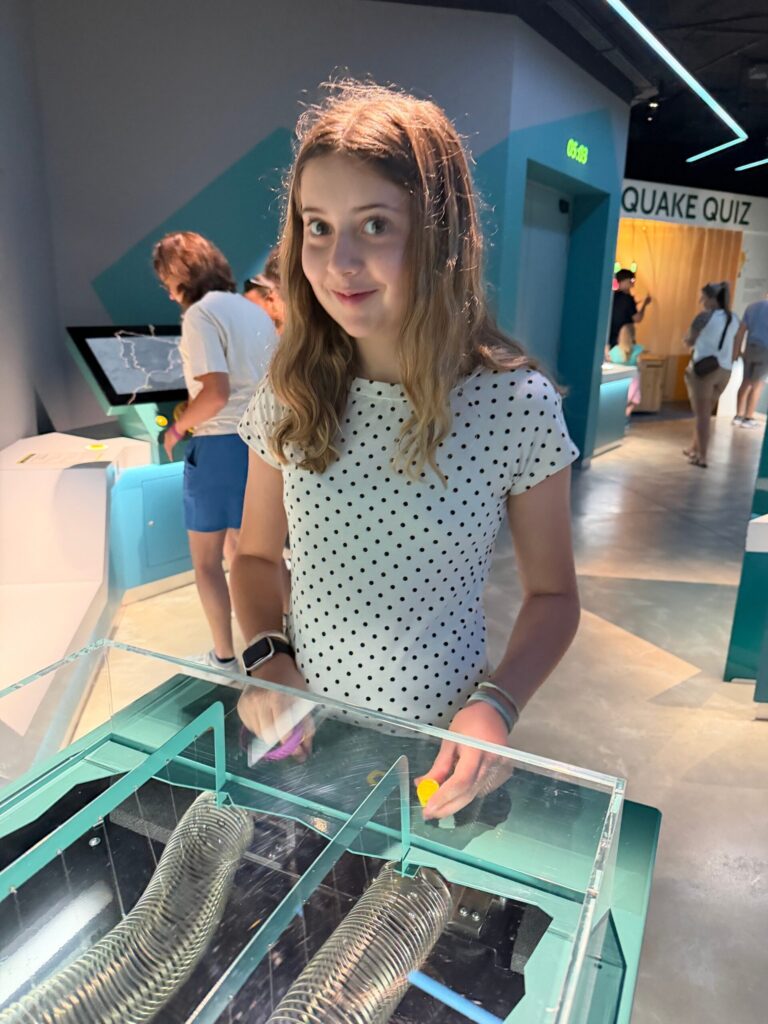
And notice what they are actually teaching. Not just history. Preparedness. Risk literacy. The stated framework connects the experience to disaster management, mitigation, and readiness, aligned with the United Nations sustainability goals. The past is being used as a rehearsal for the future. A child who walks through QUAKE does not just know more about 1755. That child is fractionally more ready for whatever comes next. That is education with a purpose beyond itself.
There is also real craft in the dosage. The rooms are timed, so the pacing is controlled. The minimum age is six, and small children are kept out of the simulator. The intensity is calibrated the way a good show is calibrated, enough to be felt in the body, never so much that it becomes distress for its own sake. And the journey ends with the rebuild, which matters enormously. You do not leave inside the catastrophe. You leave inside the recovery. Horror, then hope, in that order, on purpose.
I keep coming back to a simple principle in my own work. Name the feeling first. Decide what someone should feel before you decide what they should know, and let the feeling do the structural work. QUAKE is that principle executed at institutional scale, about an event that happened two hundred and seventy years before I was born, in a city I was visiting for the week. And it worked on my kids anyway. That is what good design does. It crosses every boundary except the one that matters, the boundary between the experience and the person inside it.
Here is the leadership lesson underneath it, because there always is one.
Every organization I know leads with information. The strategy deck. The data. The rationale. The timeline. Then everyone wonders why nobody changed, why the message did not land, why the team nodded through the presentation and went back to doing what they were already doing. The information was correct. The order was wrong.
People do not change their minds because they were given better facts. They change their minds because they felt something that made the facts matter. The feeling is not decoration on top of the lesson. The feeling is the lesson’s delivery system. Skip it and you are mailing a package with no address on it.
QUAKE understands that a frightened body learns plate tectonics better than a bored mind ever will. The question worth carrying out of Belém is where else that applies. The classroom. The boardroom. The first day of a new job. Anywhere we need someone to truly understand something, not just accurately repeat it.
Nobody retells a plaque. They retell the pew shaking under them. They tell someone who was not there, and that person feels a version of it too, secondhand but real. That is the measure of any experience, what gets carried out of the room and into someone else’s imagination.
Teach the feeling first. The facts will follow, and this time they will stay.